
Tron: Ares (2025).
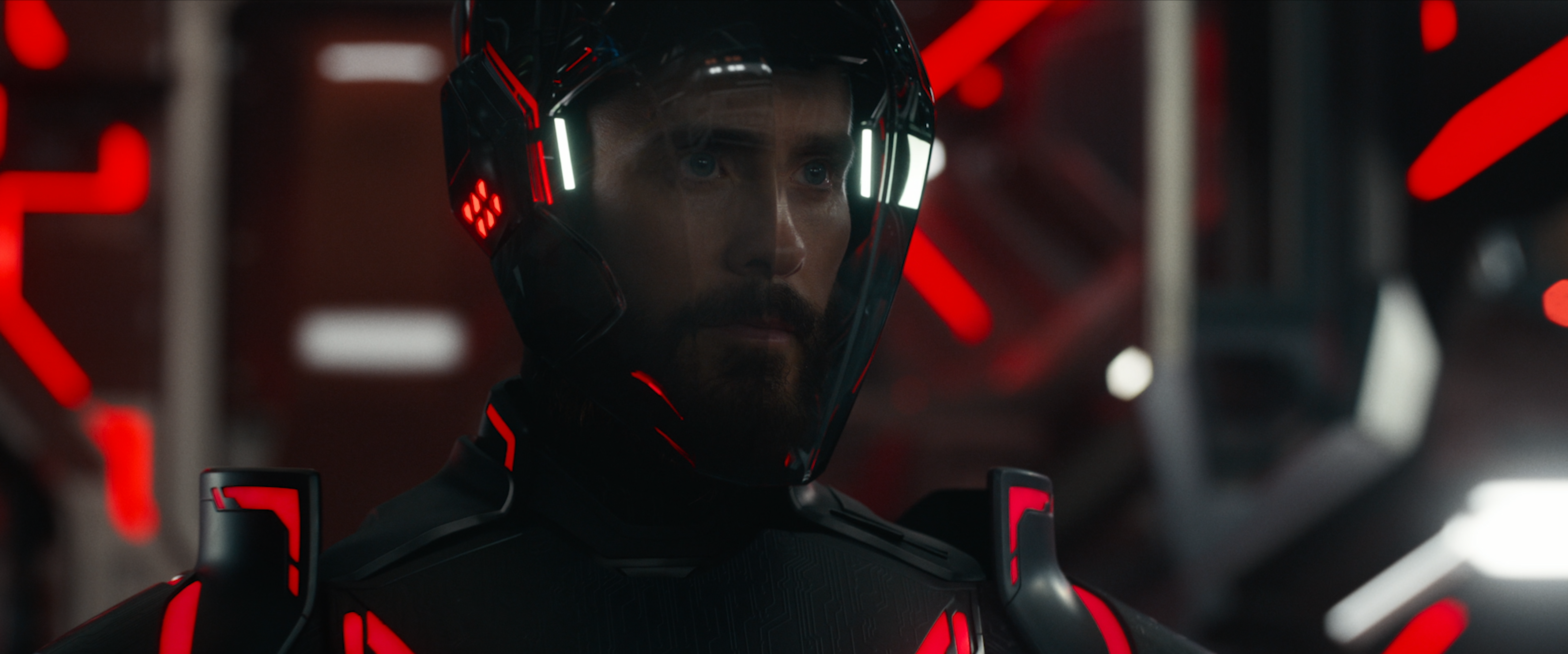
After expressing my low expectations for Tron: Ares in my article celebrating the first two Tron films, I just wanted to follow-up now that I’ve seen it. It’s probably for the best that I wasn’t eagerly anticipating the film because I did enjoy it and appreciated certain aspects and moments, even if the sum total is a film that doesn’t clear the bar set by the first two films, and fails to live up to its own potential.
Probably the most obvious way the film falls short is that the world of Tron has never felt less alive than it does in Tron: Ares. That wonderful cinematic reality, The Grid, that was invented in Tron and reimagined in Tron: Legacy, now feels more like a shallow green screen vista than a place actually inhabited by characters and that you could imagine yourself going on adventures in. Outside of some good production design , there’s just not much visual imagination, with the film leaning heavily on the visuals of the first two films without doing much to evolve them. Director Joachim Rønning brings a workman competency, but the film lacks that feeling of having a strong sense of vision behind it that the first two had. It’s more or less what you’d expect from the co-director of the fifth Pirates of the Caribbean film. It also doesn’t help that the digital effects look less consistent than they did fifteen years ago in Tron: Legacy.*1 Although I’ll admit that Tron: Ares probably looks better than a lot of the other big budget Hollywood films this year, it’s just that nearly every shot in Tron: Legacy still looks like a million bucks and Tron: Ares doesn’t meet that standard. It’s also worth mentioning that more of Tron: Ares is set in the real world than its predecessors, so maybe the world building and look of The Grid just weren’t considered as much of a priority for this one. I do think that bringing the world of Tron into the real world may have been the logical place to take the franchise, especially with Tron: Legacy pointing strongly in that direction, but a consequence is that it forces you to question the logic of how some of this is supposed to actually work in the real world, and it makes it a struggle to suspend disbelief in a way that the first two films never did by having you entering escapist fantasy worlds with their own own rules.

If I’ve hinted before that I find the original Tron a little too languid for its own good, then I think Tron: Ares suffers from taking it too far in the opposite direction. Often it feels like it prioritises rushing through its plot and showing off its action over having more subtle moments to help add depth to its characters and world. Maybe it’s a consequence of the plot revolving around a character who can only exist in the real world for twenty-nine minutes at a time, but some of the best bits in the film are when it stops for an overdue moment to breathe, like in the overly-reverent sequence where Ares visits The Grid of the original film and gets some wisdom from a ghostly Kevin Flynn, or even just seeing Ares appreciate the natural luminance of a firefly, a “stop and smell the roses” moment in a film that could use some more of them. I think Tron: Legacy struck the best balance for its pace, while also just being more satisfying on a pure action enjoyment level, with the action sequences in Tron: Ares being less well conceived and orchestrated.
There’s a lot that drags the film into mediocre territory, which is too bad because I think the basic story is actually a pretty interesting continuation for the Tron series, which in itself is admirable when a new Tron film easily could have been a rehash or soft-remake, but more than that it introduces new themes, ideas, and religious and philosophical allusions that are both worthwhile and also organic to the concerns of the first two films. I was genuinely excited to see a Tron film turn its attention to topics like finding beauty in the ephemeral and dealing with the impermanence of life, or the necessity of soldiers having a conscience rather than simply acting as weapons (with Ares even at one point being likened to Pinocchio who of course needed a talking cricket to be his conscience), or the threat of emotionally stunted tech moguls inflicting their warped vision of the future that even they themselves cannot control onto our lives. These are worthy and timely concerns. Not that any of them are delved into in a very compelling way, but it’s easy to imagine a version of Tron: Ares made ten years earlier when it was originally green lit with the core cast of Tron: Legacy along with director Joseph Kosinski set to return, that would have given it the oomph to be a great sequel. Supposedly it was the financial failure of Tomorrowland (2015) that caused Disney to put the third Tron film on hold for a decade. Apparently it was Jared Leto, who was attached to the film all the way back then, who kept the project alive and is the reason for it being made at all.
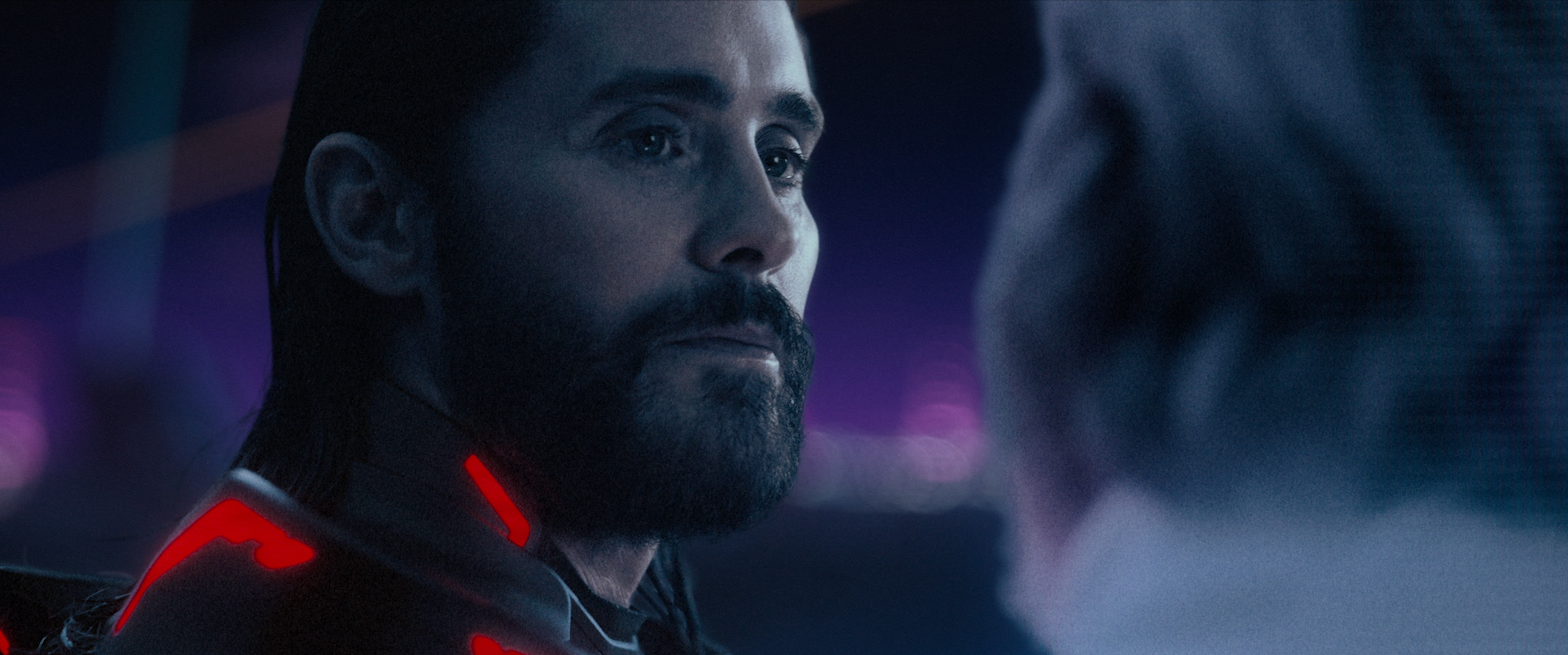
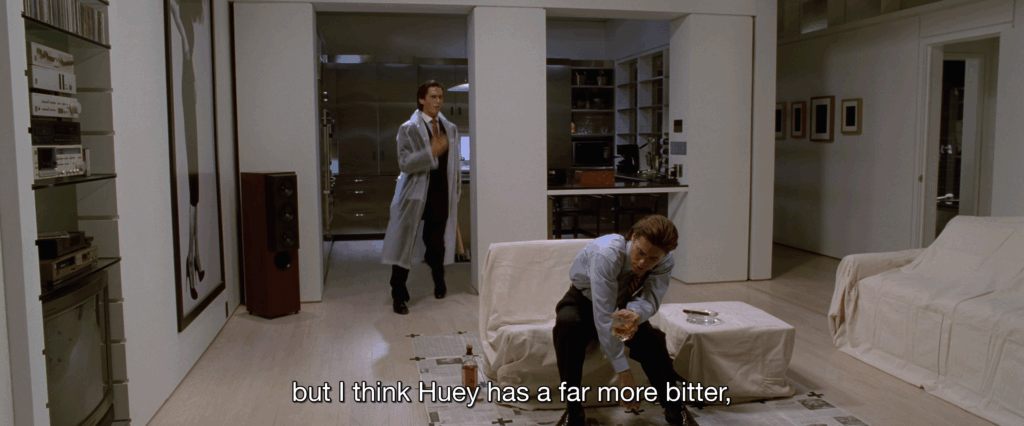
I know, I know we all like to hate on Jared Leto, so it brings me no pleasure to say I thought he was good in the role of Ares, a program built for digital warfare who turns against his evil creator in pursuit of his own humanity. Would I have liked to see another actor in the role? Sure, but begrudgingly I can’t point to Leto’s performance as being one of the shortcomings of the film. If anything it’s one of the film’s stronger assets, outside of the obvious that his inclusion is likely box office poison. Supposedly this was something of a passion project for Leto who seems to be a genuine fan of Tron, and as unlikely as it sounds I think that does come through. There’re even some good moments that are pretty specifically Leto, like for instance when Ares talks about his appreciation for Depeche Mode’s “Just Can’t Get Enough” in exactly the emotionally hollow way as the prattling about “Hip to Be Square” by Huey Lewis and The News during Leto’s death scene in American Psycho (2000). It’s also a moment that’s paid off later in the film when his character no longer describes Depeche Mode in a hollow, artificial ChatGPT-like way and instead expresses a genuine feeling that he struggles to articulate. It’s also pretty endearing to see his character die and be reconstituted numerous times like a video game character with multiple lives (even if it does feel tacky to see the opening credits played over a scene of this rather than be given a dedicated title sequence, which perhaps could be taken as a red flag for the breaking away from the class of the first two films), and then being willing to trade it away to have the single impermanent life of a human.*2
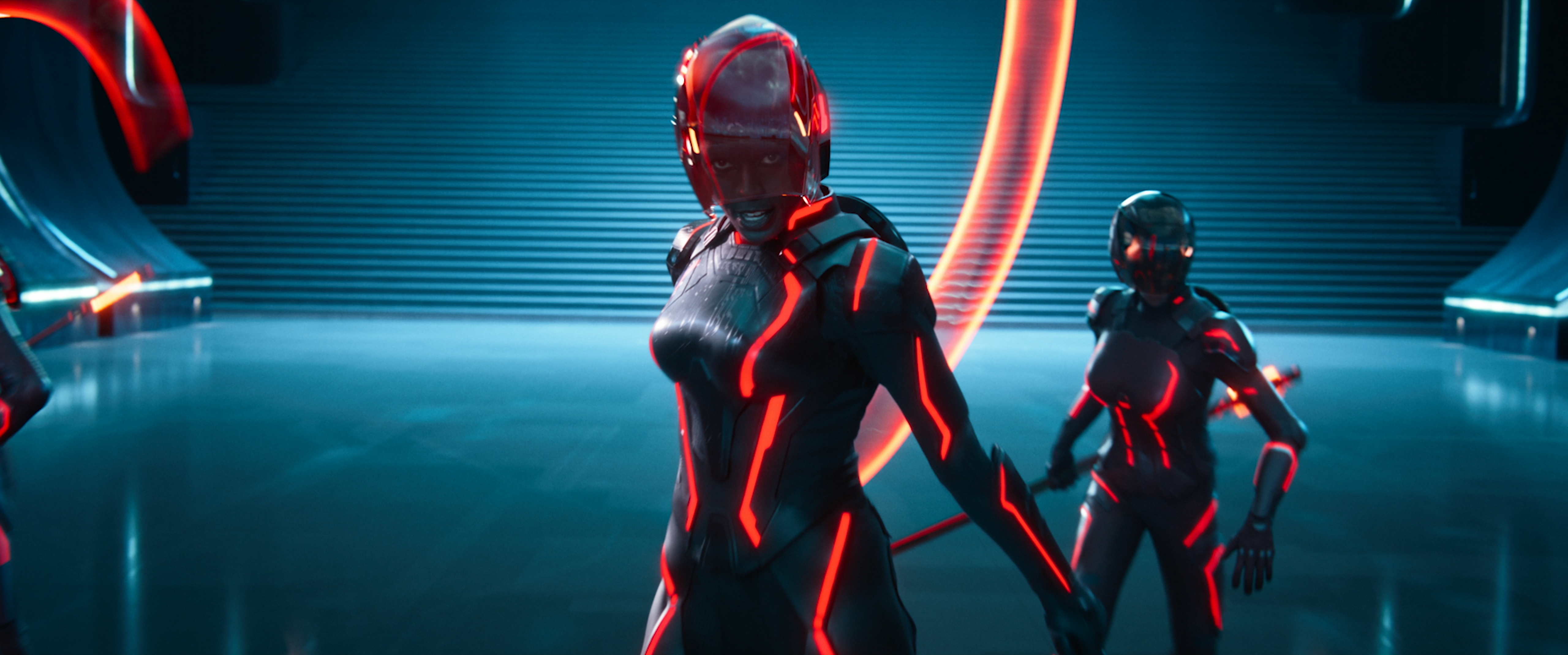
I do wish that some of the program characters had more personality though. After all in the previous films the programs weren’t at all blank slates. Just look at all the personality Dan Shor gave to Ram in Tron, or that Michael Sheen gave to Zuse in Tron: Legacy. I suppose it could be explained away as being a result of the more single-minded militaristic programming for the new artificial characters, but it still makes them difficult to engage with. Jodi Turner-Smith’s character Athena, probably suffers the most from lack of personality, with not much to do other than “fashion show runway walk” glower through most of her scenes. I think Turner-Smith has a strong screen presence and a great otherworldly androgynous look as the film’s secondary antagonist, but the character should either be less flat or else be more locked-in as a slick killing machine in the vein of Robert Patrick’s T-1000 from Terminator 2 (1991). Actually I’d probably prefer her being more the later, if I’m being sincere.
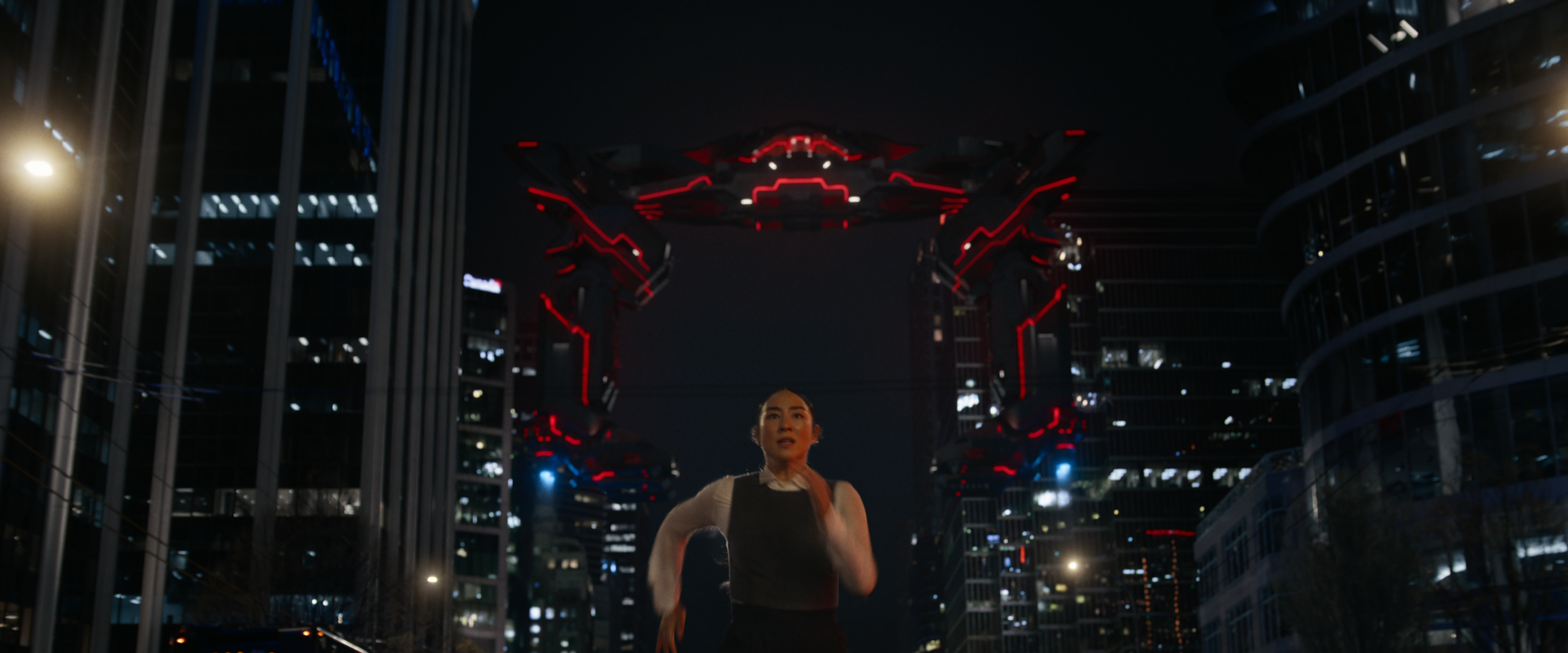
The human characters aren’t much better off, with Greta Lee doing as well she can with what’s asked of her, being the audience surrogate and co-leading the film as Eve Kim, a character that’s a reworked version of the role that a returning Garrett Hedlund as Sam Flynn was meant to play when the film nearly went into production back in 2015. I think Lee is a good actress, but I find that she does gets a bit lost in chaos of the film, with her talents mostly going to waste. It really feels like she could have used at least one meaty emotional scene dealing head-on with the loss of her character’s sister. Considering the film’s themes and also how some real-life “generative A.I.” companies have advertised their software as being able to animate photos of deceased loved ones, I was half-expecting a moment in the film where the villain would create a digital doppelgänger of Eve’s deceased sister that she would be forced to face off with and confront her grief head-on, and it was perhaps one of the film’s numerous missed opportunities that something like that didn’t happen. There’s also Evan Peters who gives an engaging enough performance as the film’s villain, Julian Dillinger, a tech savant who is a mamma’s boy to the under-utilized Gillian Anderson. Although she does have a few good moments, like when Peters yells “I’m in!” as he uses Ares to hack into a server to steal a file and Anderson responds by muttering under her breath, “In deep shit.”
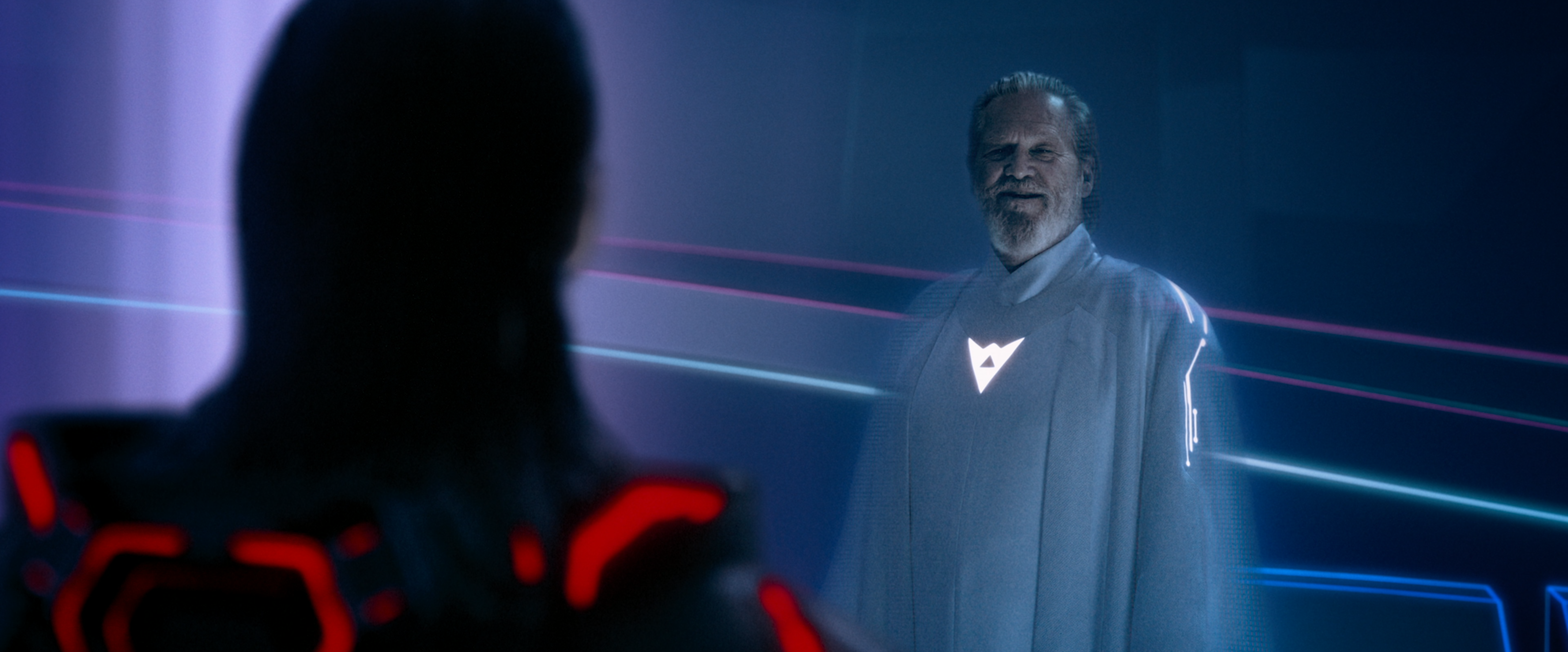
There’s also the return of Jeff Bridges, and even if his role in the film doesn’t make complete logical sense and isn’t a whole lot more than a cameo, his presence in the film is most welcome. I think Bridges does some generous acting in his scenes with Leto that help make Ares a more likeable character and to better sell his character arc. It’s also just a surprisingly poignant little farewell performance to the world of Tron by Bridges.
I suppose I should also say something about The Nine Inch Nails soundtrack which has been a major part of the marketing push for Tron: Ares, and an aspect of the film that has been seeing consistent praise. Truthfully, I don’t think it really worked for the film. The music itself is cool and I’ll probably enjoying listening to it on its own, but it often doesn’t mesh well with the emotions or visuals of the film, especially in contrast to the perfect way the Daft Punk score did for Tron: Legacy. There’s one sequence in particular where Ares and Eve escape on the Tron version of a jet ski where I found the music being played was outright distracting as it clashed with tone of the moment.
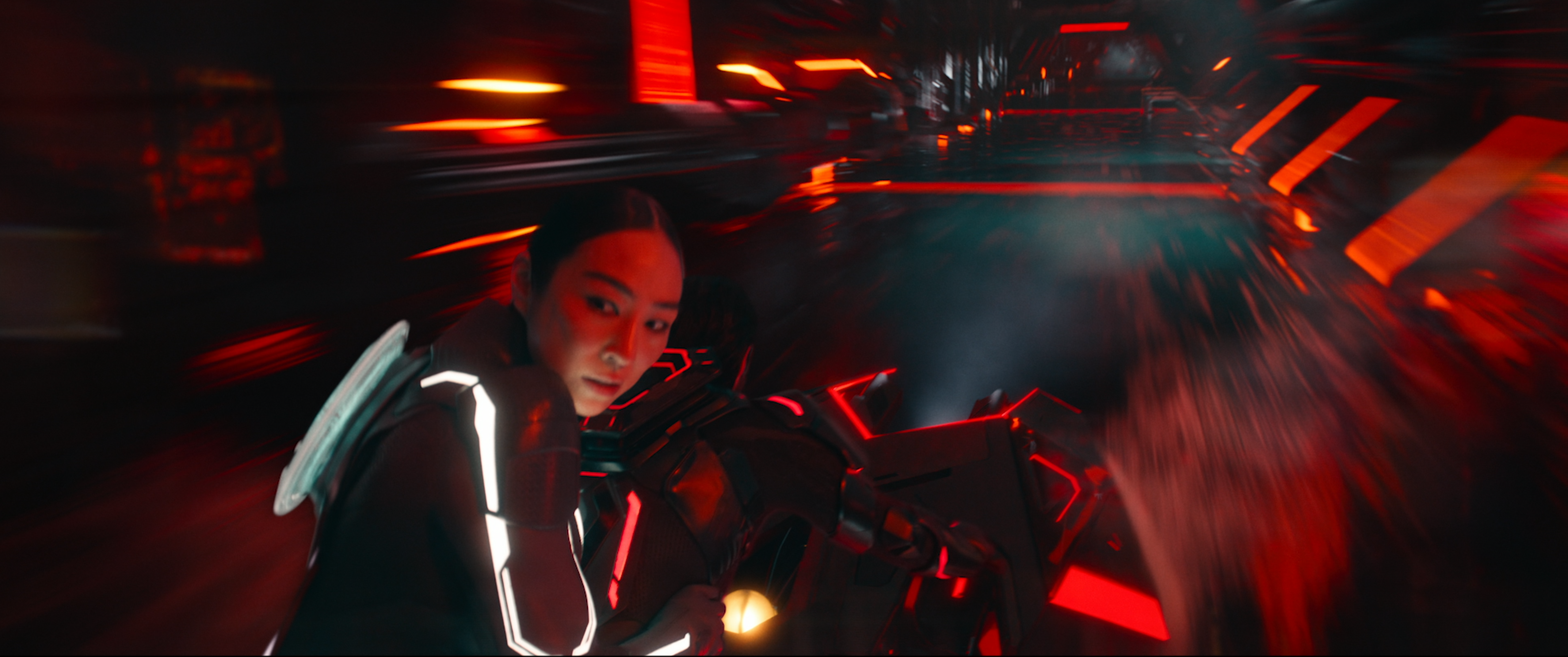
As far as the current state of blockbusters goes, Tron: Ares is hardly a disaster, it’s pretty standard stuff to eat your popcorn to. As far as Tron films go though, this is the first one to not have an idiosyncratic vision or be forward-looking in any bold or meaningful ways, which was a big part of the charm and appeal of the first two. Whatever flaws the first two Tron films may have had, they reflected a mission statement on the necessity for artists to be on the digital frontier, and because of that both movies were artful and special in their own ways. So while I don’t think Tron: Ares is a bad movie, that it has material that could have lent itself to being something special but was handled in an artless way, perhaps makes it worse off in my book. So if this review comes across as a bit harsh for a film that I actually had a fairly good time at the movies with, that’s the reason why. Still, even as the most generic of the Tron movies, I can imagine Tron: Ares getting some cult appreciation by proxy. It’s the sort of film that I might catch myself rewatching at some point, less often than the first two, but maybe if some day I buy a box set with all three films it’ll slip into the rotation on a lazy Sunday.
Tron: Ares does end with some pretty heavy sequel baiting, though with its current box office performance it doesn’t seem likely that we’ll see that any time soon if at all. Who knows though, maybe we’ll get a better Tron film in another fifteen to thirty years, because Disney does seem to be determined to keep this franchise going.
Film ‘89 Verdict: 5/10.
___________
*1 – Of course the digital de-aging in Tron: Legacy is the glaring shortcoming in its special effects, but I did find it especially funny that after years of grumbling about the unconvincing digital de-aging in Tron: Legacy, the very first thing Tron: Ares does is hit you with an unconvincing digitally modified version of Jeff Bridges. I think in this case it appeared to be old talk show interview footage with unconvincing digital mouth manipulation.
*2 – I do wonder if perhaps the Doug Liman action science fiction film Edge of Tomorrow aka Live Die Repeat (2014) was the inspiration for this aspect of the film, considering that an early version of Tron: Ares nearly went into production in 2015.