
The origin of the Academy Awards and the control of an industry.
According to today’s popular media, the Academy of Motion Picture Arts and Sciences (AMPAS) – and it’s awards ceremony known to one and all as The Oscars – exists as the ultimate arbiter of cinematic excellence. The annual broadcast of the Academy Awards is framed as a democratic celebration of craft, where the industry honours its own. Countless hours of programming is dedicated to predicting who will win the major awards, often relying on the massive number of honours given from December to early March by organisations from around the world, to make these predictions. It’s a massive industry which brings together newspapers and TV, designers and stylists, and bookies from all around the world.
It’s prestigious and coveted, especially by filmmakers and artists who work within the Hollywood industry. Although most members of the public struggle to name the previous year’s winners, an Oscar nomination has traditionally caused a bump in a film’s box office.
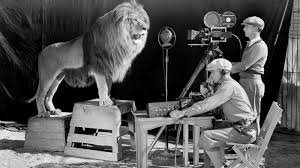
However, a look back at the Academy’s founding in 1927 reveals a more pragmatic and politically charged origin. Far from being a purely aesthetic endeavour, the Academy was engineered by Louis B. Mayer—the formidable head of Metro-Goldwyn-Mayer (MGM)—as a sophisticated instrument of labour management. Its primary objective was not the distribution of golden statuettes, but the preservation of the ‘Studio System’ – the organised manufacture of movies where the studio was a production line and the stars were mere cogs in the machine. It was set up to continue the systematic suppression of independent labour unions which were threatening the status quo throughout the 1920s. Hollywood was undergoing a transition from a collection of independent producers to a high-stakes corporate oligarchy emphasising vertical integration and restricting power into the hands of a few people. Studios such as MGM, Paramount, and Warner Bros. controlled every facet of the business: production, distribution, and exhibition.
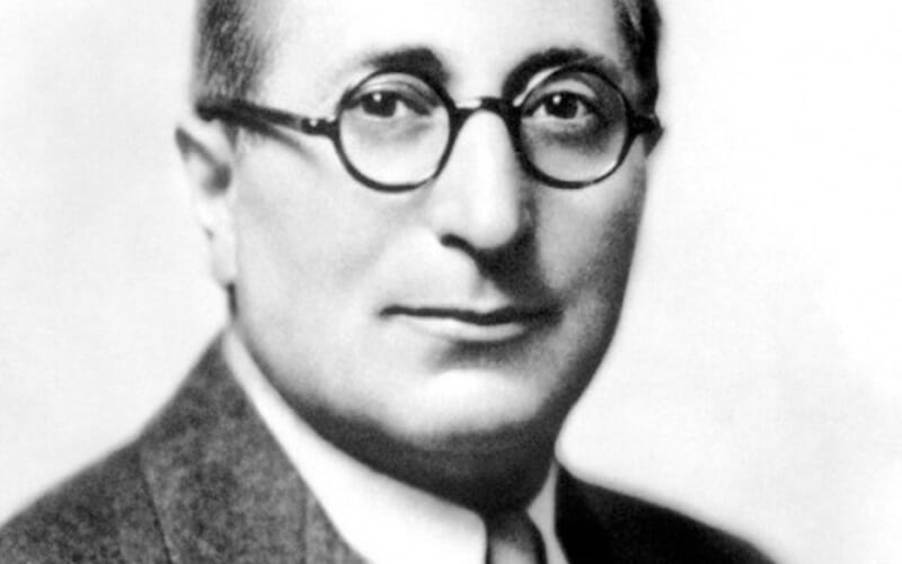
At the centre of this power structure was Louis B. Mayer. As head of MGM, part of Marcus Lowe’s distribution empire, Mayer operated MGM through a philosophy of industrial paternalism. He viewed the studio as a family and himself as the patriarch. Under this model, the ‘talent’—actors, writers, and directors—were treated as valuable but volatile assets. By providing them with long-term contracts, massive publicity machines, and luxurious lifestyles, Mayer expected absolute loyalty. These contracts often included seven-year options, which allowed the studio to drop a performer at six-month intervals (should they not perform at the box office) while the performer remained legally bound to the studio for the duration (providing they perform at the box office). It was a deliberate strategy to prevent employees from viewing themselves as a workforce and opening up the possibility of starting a union.
Mayer’s brilliance lay in his ability to blend sentimentality with ruthlessness. He often wept in his office to manipulate stars into taking lower salaries, yet he was the first to blacklist any worker who dared to question the studio’s authority. To Mayer, the studio was a closed ecosystem; the introduction of external labour influence was not merely a financial threat, but a personal betrayal of the ‘MGM family’.
The peace of the paternalistic model was shattered in the mid-1920s by the growing influence of below-the-line craft unions. Carpenters, electricians, and stagehands, organised under the American Federation of Labour (AFL) and the International Alliance of Theatrical Stage Employees (IATSE), began to demand standardised wages and working conditions. Unlike the actors, these workers saw themselves as labour, not ‘artists’, and were prepared to strike to halt production.
The crisis peaked in late 1926. Fearing a total industry shutdown that would jeopardise the transition to sound technology—an investment which was rewriting the cinematic rules and costing the studios millions—the major studio heads were forced to negotiate. On November 27th 1926, the Studio Basic Agreement (SBA) was signed. This document was a watershed moment, for the first time, the Moguls officially recognised the right of unions to exist and bargain within Hollywood.
For Louis B. Mayer, the SBA was an unacceptable concession. He viewed the intervention of outside labour leaders—‘agitators’ as they were often called—as a violation of his corporate supremacy. Moreover, he realised that the SBA could create a domino effect and soon it would be the above-the-line creative talent who would pose a threat. The prospect of an actors’ union or a writers’ guild holding a production hostage was a threat to the very foundation of the Studio System’s profitability. Mayer knew he could not stop the momentum of the craft unions, but he could build a wall around his most valuable assets: the stars, the directors, and the writers.
Mayer’s response was a masterclass in corporate counter-insurgency. Rather than attempting to dismantle the unions through brute force—which had failed in the past—he set out a more softly-softly approach. His goal was to create what sociologists call a ‘company union’: an internal body that would offer the appearance of collective representation while remaining firmly under the influence of management.
In early January 1927, Mayer invited a small group of elites to a private dinner at his home. The group included actor Conrad Nagel, director Fred Niblo, and Fred Beetson (head of the Producers’ Trade Association). Mayer proposed an organisation that would represent the five ‘branches’ of film production: Producers, Actors, Directors, Writers, and Technicians.
By bringing these various branches of the film-making process under one roof, Mayer intended to foster a sense of common interest between the workers and the bosses (very much like the end of Fritz Lang’s masterpiece, Metropolis – although, as that film had only had its Berlin premier on January 10th, any connection is pure speculation on my part).
The genius of the five-branch structure was that it placed the Producers—the employers—at the same table as the employees. If a writer had a grievance, they would not go to an outside union; they would bring it to the Academy’s internal arbitration committee. This effectively neutralised the threat of third-party labour organisers by keeping all disputes ‘in-house’ and ensuring that the final word always rested with a body dominated by studio interests.
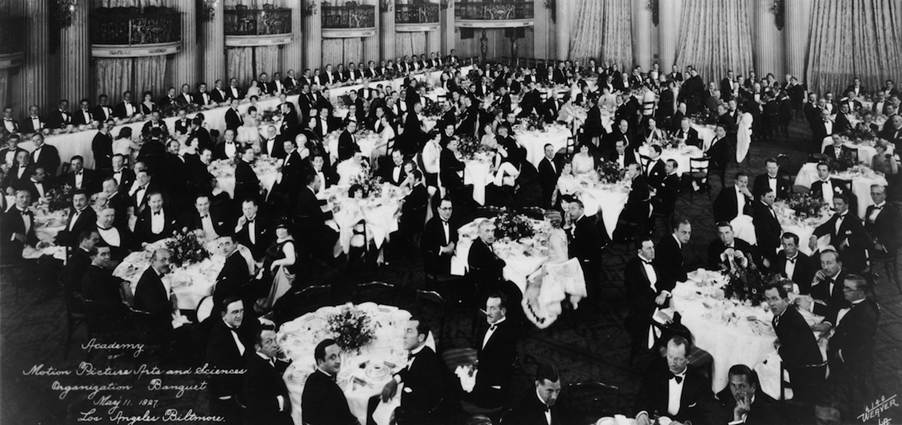
The official launch of the Academy of Motion Picture Arts and Sciences took place on May 4th 1927, at a lavish banquet in the Crystal Ballroom of the Ambassador Hotel. The 36 founding members were the ‘aristocracy’ of Hollywood, including Mary Pickford, Douglas Fairbanks, and Cecil B. DeMille. The best picture of that year went to two films – For artistic excellence: Sunrise: A Song of Two Humans, and for entertainment: Wings. By framing the Academy as an elite, invitational body, Mayer appealed to the vanity of the creative class.
The Academy’s original charter listed several goals, including the promotion of technical progress and the ‘reconciliation of internal differences’. This was deliberate code for labour arbitration. For several years, the Academy functioned as the primary mediator for contract disputes. When an actor felt overworked or a writer felt underpaid, the Academy would step in to ‘harmonise’ the relationship. However, because the Academy was funded by the studios and its leadership was dominated by producers, these mediations almost invariably favoured the status quo. It was a closed loop of power designed to make external unions out of the picture.
The most enduring element of Mayer’s strategy was the creation of the Academy Awards of Merit. While the Academy was busy with technical standards and labour disputes, Mayer realised that the organisation needed a public-facing hook to maintain the loyalty of its members. He famously articulated the psychological utility of the awards in a candid conversation with his biographer, Scott Eyman;
‘I found that the best way to handle [filmmakers] was to hang medals all over them. If I got them cups and awards, they’d kill themselves to produce what I wanted. That’s why the Academy Award was created.’
This ‘Medals Theory’ is essential to understanding the Oscar’s function in labour history. In a traditional labour union, power is derived from collective solidarity—the idea that ‘an injury to one is an injury to all’. The Academy Awards promoted the exact opposite, which spoke to the heart of American idealism: individual exceptionalism.
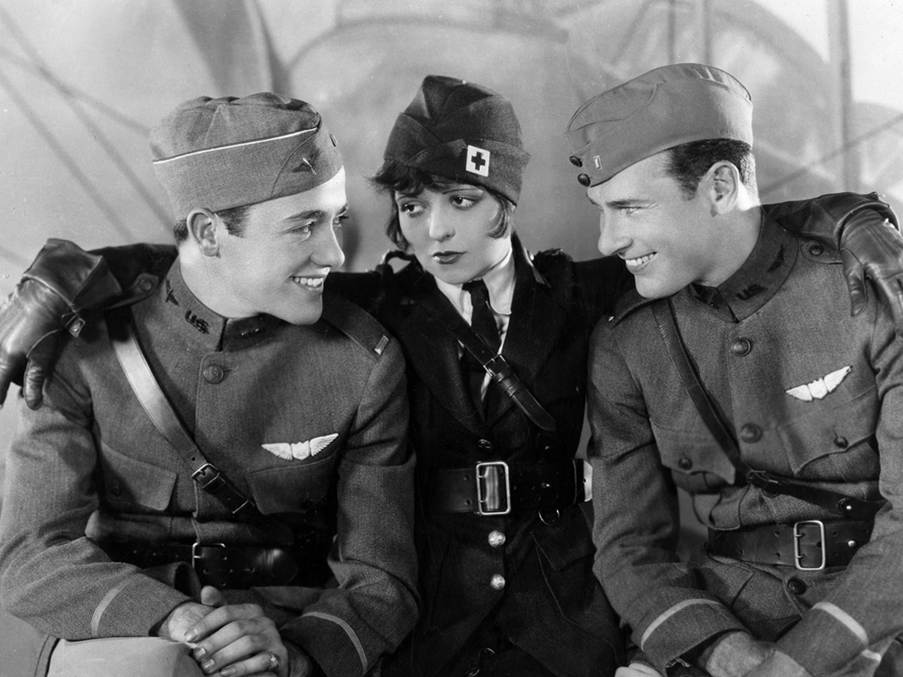
By creating a highly publicised competition for prestige, the Academy encouraged actors and directors to compete against one another for the favour of the industry elite. An Oscar winner gained immense individual bargaining power for their next contract, but this did nothing to improve the conditions for the rank-and-file workers of their branch. The ‘medal’ acted as a psychological bribe, distracting the creative elite from the benefits of collective bargaining with the allure of personal validation and career advancement. It transformed the workplace from a site of collective struggle into a theatre of individual competition.
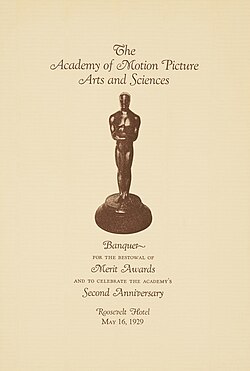
Even the design of the statuette itself, conceived by MGM’s art director Cedric Gibbons, reinforced the Academy’s industrial hierarchy. The figure is a knight holding a crusader’s sword, standing upon a reel of film. The five spokes of the film reel represent the five original branches of the Academy.
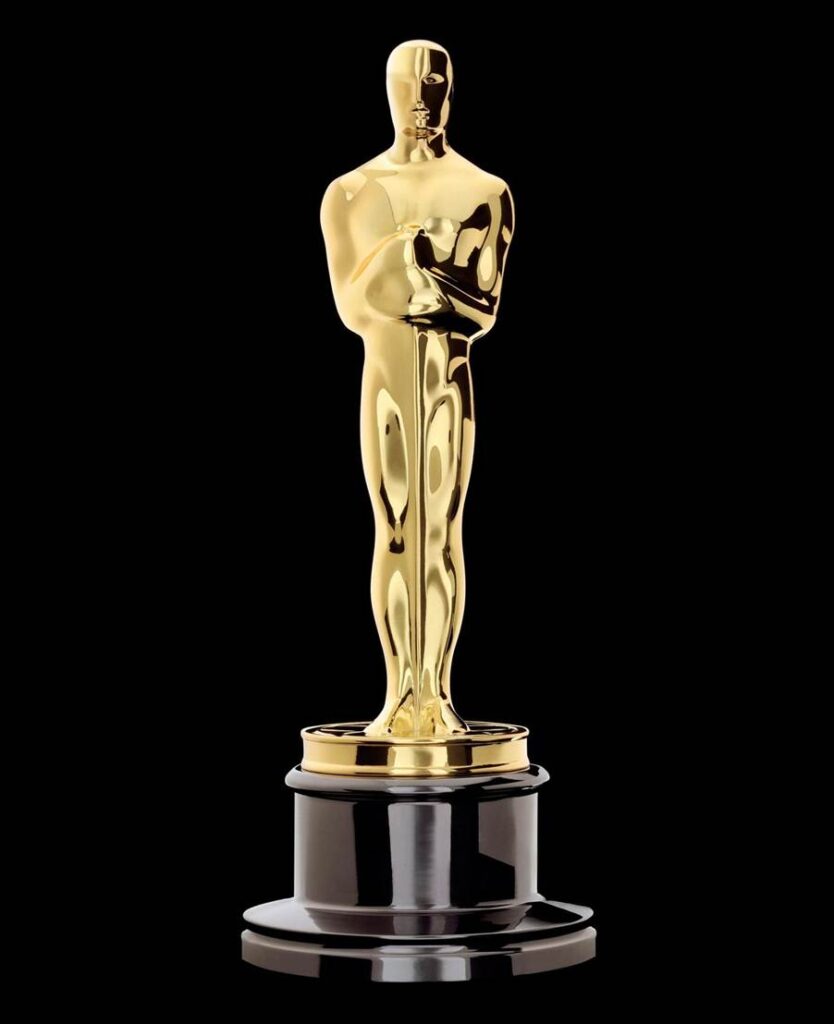
From a labour perspective, the imagery is telling: the knight (the elite talent) stands atop the film reel (the industry), physically supported by the structure that Mayer created. The sword symbolises the ‘defence’ of the industry—not from artistic stagnation, but from the perceived ‘barbarism’ of the trade unions. The Oscar was not just a prize; it was a badge of membership in a corporate-sanctioned elite.
The inherent conflict of interest in the Academy’s ‘company union’ model became undeniable during the Great Depression. In 1933, as theatre revenues plummeted and the banks that funded the studios began to panic, the major studios—led by the Association of Motion Picture Producers—demanded an immediate, across-the-board 50% salary cut for all employees, including those under contract.
The Academy’s leadership, rather than defending the interests of the actors and writers, initially cooperated with the producers to implement these cuts. This betrayal was the death knell for the Academy’s credibility as a labour body. The ‘talent’ realised that when the interests of the studio and the interests of the worker diverged, the Academy would always side with the studio.
The 1933 salary cuts acted as a radicalising force. Writers, who had long felt like ‘hired pens’ in the studio system, realised that the Academy’s promise of ‘honour and dignity’ was hollow if their contracts could be unilaterally slashed. Actors, even those who had won Oscars, began to see themselves as workers rather than pampered guests of the moguls.
The failure of the Academy directly lead to the formation of independent, militant guilds. The transition of bargaining power from the Academy to the Guilds was a period of uncertainty and conflict within the industry. Some of the most famous guilds and organisations (which ironically feed the Oscar speculation frenzy we have today) include;
The Screen Writers Guild (SWG); Although founded earlier, the SWG was revitalised in 1933 in direct opposition to the Academy’s cooperation with the salary cuts. Writers began to resign from the Academy en masse, arguing that it was impossible to be part of an organisation that represented both the buyer and the seller of labour.
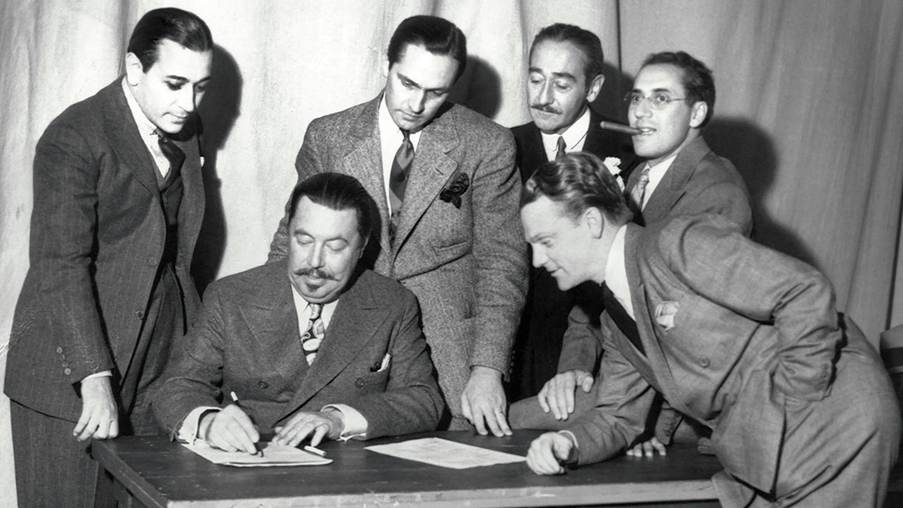
The Screen Actors Guild (SAG); Founded in July 1933 by a group of character actors and stars, including Ralph Morgan and James Cagney. SAG’s founders explicitly cited the Academy’s impotence and its status as a ‘company union’ as their primary reason for organising. They famously stated that they needed an organisation that was ‘of, by, and for the actors’, with no producers allowed.
Louis B. Mayer’s reaction was, as you can imagine, apoplectic. He viewed the formation of SAG and SWG as a personal insult. MGM became a fortress of anti-union activity; Mayer threatened to blacklist any actor who joined the Guild and used the Academy as a ‘scab’ organisation to attempt to undercut Guild negotiations. For several years, the Academy Awards were boycotted by Guild members, and the 1936 ceremony almost failed to happen as actors and writers refused to attend.
The final blow to Mayer’s original vision for the Academy came from the federal government. In 1935, President Franklin D. Roosevelt signed the National Labour Relations Act (the Wagner Act). This landmark legislation prohibited employers from creating or supporting ‘company unions’ that interfered with the rights of employees to organise independently.
Under the Wagner Act, the Academy’s structure—where producers participated in the governance of employee branches—became legally untenable. After a series of court challenges and investigations by the National Labour Relations Board (NLRB), the Academy was forced to officially abandon its role as a labour negotiator in 1937. The guilds were officially recognised as the sole bargaining agents for their respective crafts.
Mayer’s grand wall had been breached. The Academy was stripped of its power to arbitrate, and for a moment, it appeared the organisation might collapse entirely. Its membership had dwindled, its treasury was empty, and its purpose was unclear.
The Academy survived its 1930s labour crisis by performing a strategic pivot. Deprived of its function as a company union, it leaned into its role as a PR machine and a technical research body. It rebranded itself as a purely ‘cultural’ non-profit entity, dedicated to the advancement of the ‘art and science’ of motion pictures.
This transition was, in its own way, another victory for the studios. While the moguls had lost control over wages and hours to the Guilds, they realised that the Academy Awards remained a powerful marketing tool. An Oscar nomination boosted box office returns and increased the value of some of its biggest stars. The awards were shifted from a tool of internal labour control to a tool of external market expansion.
By the 1940s, the Academy had successfully distanced itself from its union-busting origins. The Oscars became a global brand, synonymous with the magic of Hollywood rather than the machinations of the front office. Yet, the structure Mayer built—the branch system, the exclusive membership, the focus on individual merit—remained largely intact.
The history of the Academy of Motion Picture Arts and Sciences serves as a vital case study in industrial relations and corporate strategy. It demonstrates how prestige can be weaponised to maintain power and how awards can be used to dilute collective bargaining. It basically pits one writer, director, actor, or technician against another.
Louis B. Mayer did not just build a studio; he built a cultural infrastructure designed to manage human behaviour through the promotion of vanity and status. While the Oscars are now universally seen as a celebration of art, they began as a defensive mechanism for an industry that feared the power of the organised worker. The ‘honour and dignity’ the Academy sought to provide was, in its earliest form, a substitute for the rights and protections of a union contract.
Today, when we watch the golden statuette being handed out, we are seeing the final, polished product of a system designed to keep the workers in their place. The Oscar is a testament to the talent of the artists who receive it, but it is also a permanent monument to the man who once thought he could replace a union with a golden statue. The tension between art and industry, between the individual and the collective, remains the defining drama of Hollywood—a drama that was scripted in the Crystal Ballroom of the Ambassador Hotel in 1927.