

Triumph and Trauma in ‘80s Action Movies.
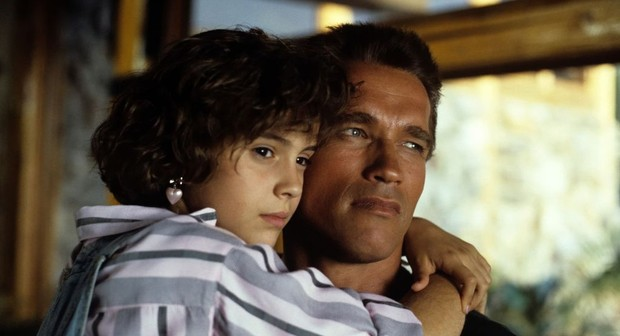
The 1980s action cinema landscape is often unfairly reduced to a collection of invincible caricatures and pyrotechnics. It wasn’t about nuance, it was about body counts and explosions, one-liners and interesting ways to dispatch a bad guy. However, for those who sat in the darkened cinemas, or who saw these films for the first time on home video, there was much more to find and experience. Action cinema revealed the depth of the human spirit in a way that was entertaining and involving. It offered a profound feeling of positive reinforcement and behind the bombast we were presented with a cinematic manual for resilience, competence, and the restorative power of persistence.
This may sound hyperbolic, yet the action films that so embodied the 1980s allowed an audience who would never sit down and watch a film by Bergman or Ozu, to experience important elements of life in the most entertaining of guises.
The reason for this is because ‘80s action films, despite their reputation, possessed a radical honesty regarding the protagonist’s vulnerability. Unlike the detached demi-gods of earlier eras (including such diverse examples as Basil Rathbone’s Sherlock Holmes, to the James Bonds of Sean Connery and Roger Moore), the ‘80s hero was often a broken vessel. They didn’t look at the world and the threats they faced with dispassionate cynicism, they lived every blow and every cut.
Many contemporary and academic critics often viewed these films through a lens of geopolitical cynicism. Depending on which side of the political spectrum you sat, the reliance of lone wolf heroes was either a reflection of Reaganism and American exceptionalism or a celebration of violence and dehumanisation. In other words, a place where every character was a John Rambo and every critic was a Sheriff Will Teasle. However, the actual experience for the audience was far removed from a debate on foreign policy or the aesthetics of violence. To those of us sitting in the cinema, the films were not political manifestos, they were visceral, emotional anchors. Where a critic might have seen a projection of nationalistic muscle-flexing, we saw a much more intimate struggle for survival and the validation of the individual against an uncaring machine (just as Sarah Connor did in her fight against Arnold Schwarzenegger’s Terminator).
To illustrate this, let’s look at a couple of examples of ‘80s action heroes and the struggles they faced.
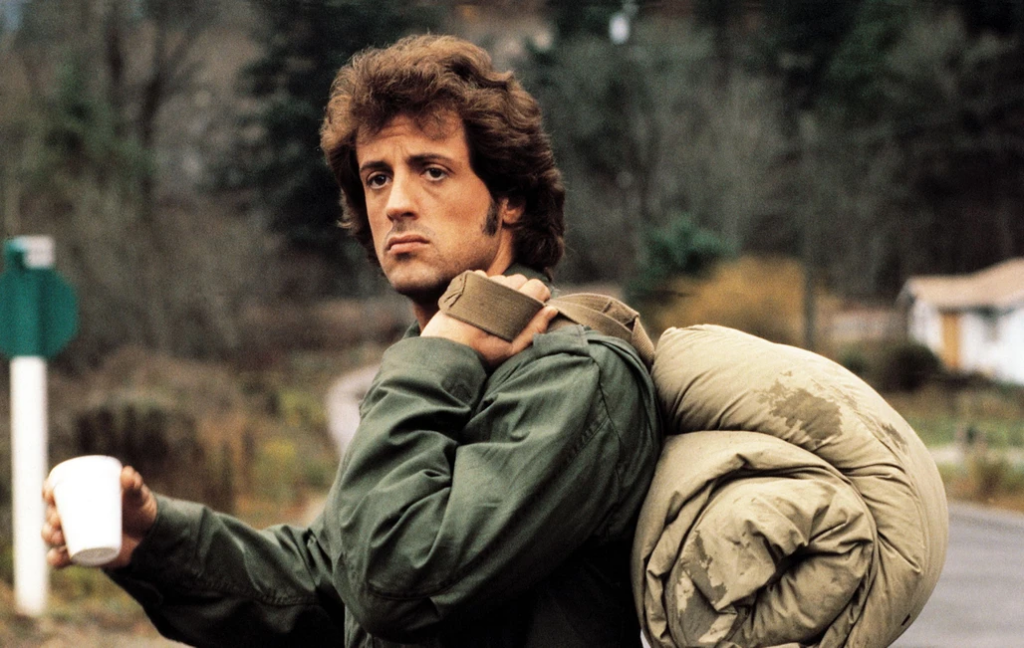
Firstly, there’s the aforementioned John Rambo (Sylvester Stallone) in First Blood. While later iterations of the character became synonymous with violent spectacle and gloriously gory body counts, his debut was a harrowing exploration of a man discarded by the society he served. Rambo’s struggle was not merely against a small-town police force, but against the crushing weight of Vietnam-era trauma and the isolation of the returning veteran. This was portrayed to brilliant effect by Christopher Walken in The Deer Hunter and John Voight in Coming Home, but Rambo’s journey is more exciting and just as cathartic. The audience experiences a form of positive reinforcement through Rambo’s pain.
He was a man pushed to his absolute limit who refused to be erased. For the countless viewers watching, Rambo represented the idea that having scars – be they mental or physical – does not disqualify him from being a person of value. When John Rambo enters the town of Hope, Washington (tellingly changed from the novel’s Madison, Kentucky), Sheriff Teasle doesn’t see a man, he sees something less – an animal, a threat. To be blunt, there is no Hope for a Vietnam vet here. But Rambo is a man with a past more real and traumatic than anything Teasle could ever know. Or indeed, would want to know. First Blood taught us that the struggle to find one’s place in an indifferent world is a battle as real and urgent as anything experienced on the literal front line.
Rambo is introduced not as a warrior, but as a wanderer seeking a friend from his unit, only to find that cancer – a byproduct of Agent Orange – has claimed the last person who truly knew him. His subsequent breakdown in the woods is a visceral manifestation of post-traumatic stress. When he eventually breaks down in tears in front of Colonel Trautman at the film’s climax, we see that the invincible archetype that Trautman narrates to anyone who will listen, was built on sand. Even a killing machine is human and that his invincibility is an outward projection. Inside, Rambo is as human, and as damaged, as you or me.
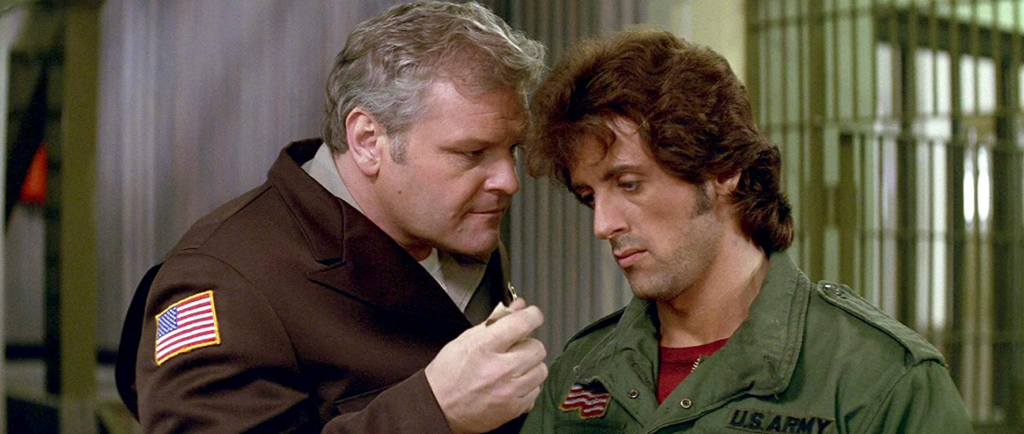
At the police station, Rambo’s trauma is triggered by the oppressive, sensory-rich environment of a police station. The flash of a razor blade and the coldness of a hose-down do not simply remind him of his time as a prisoner of war; they physically transport him back. When we see the jagged, chaotic images of the Vietnamese camp superimposed over the impersonal police station, we are seeing a man going through an emotional breakdown.
This theme of psychological burden was further elevated through the character of Ellen Ripley (Signourney Weaver) in Aliens. Returning to the screen not as a conquering hero, but as a traumatised survivor, Ripley’s journey is a wonderful illustration of the triumph of the human will. She is haunted by the events experienced on the Nostromo (in Ridley Scott’s 1979 film, Alien). She is plagued by nightmares and the devastating loss of her daughter and her previous life. Her decision to return to LV-426 is not born of bravado, but of a desperate and courageous need to confront her fears. Ripley’s arc reinforced the vital lesson that true bravery is not the absence of fear, but the ability to function in spite of it. By transforming her trauma into a protective, maternal force, she showed a generation that our past horrors can be forged into a shield against the horrors the universe throws at us. Ripley’s vulnerability is explicitly tied to her maternal loss and her survivor’s guilt. The scene in the extended version of Aliens where she learns that her daughter, Amanda, died of old age (specifically cancer in an earlier draft of the script) while she was in stasis is the emotional engine of the film. In Alien, she was a functionary facing both a terrifying threat and the gradual loss of all her colleagues. She starts as one of us, then goes on to be much more. She shows us that the hero didn’t need a pedestal.
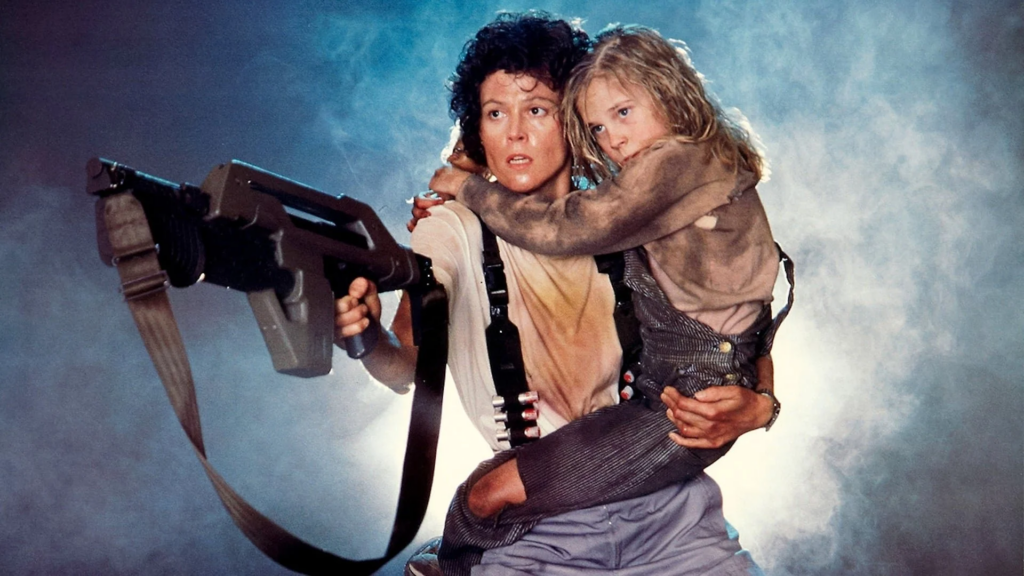
Like Rambo, Ripley is still experiencing her trauma. Her recurring nightmares – specifically the visceral, terrifying dream of a Xenomorph erupting from her own chest – serve as a reminder that the past is not yet passed.
Ripley’s battle against the Alien queen is a fight between two mothers – one, a human, caring individual, and the other an uncaring alien. The Power Loader is not just a cool looking piece of machinery, it is also a symbol of her strength and resilience. It is no coincidence that, as she faces off against the Queen, she is placed in the very heart of the machine.

John McClane was another representation of the ordinary, average Joe forced into extraordinary circumstances while carrying heavy personal baggage. He is a man whose marriage was fracturing, who was physically separated from his children, and who spends much of his ordeal simply trying to survive long enough to see his estranged wife again. His bare feet, bleeding across broken glass, and his increasingly soiled vest, became a visceral metaphor for the sheer effort required to fix what is broken. McClane’s vulnerability was his greatest strength because it made his eventual victory feel earned through grit rather than destiny. To the audience, McClane’s struggle suggested that even when our personal lives are in disarray, we can still possess the need to do the right thing and fight for the people we love.
John McClane’s troubles aren’t alien or war related – they are simply domestic, yet still a powerful motivation. His vulnerability is grounded in his failure as a husband. Throughout Die Hard, he is constantly checking his wife’s name on the office directory or looking at a photo of his children. Like Ripley, he is in an alien environment – a New York beat cop in a high-tech Los Angeles skyscraper. Just like his bare feet, he is exposed and unprotected. When he asks Al Powell to tell his wife that he was sorry for being a ‘jerk’, he is acknowledging his own flaws. Without these flaws, we as an audience wouldn’t care about his plight at all.
Like Ripley, McClane and Rambo, Kyle Reese in The Terminator is a soldier struggling with a world that he cannot fully understand. He is a man born into an apocalypse, sent back to a 1984 that feels like a dream world to him. Reese is physically scarred and emotionally starved, yet his vulnerability is what makes his mission so moving. He is not a polished protector (he can barely steal a pair of trousers that fit him); he is a man who has experienced the most terrifying sights we can imagine. His dreams reveal the depth of his trauma and the fact that he spends much of his time terrified. The same can be said of Sarah Connor’s dream of the apocalypse in Terminator 2: Judgment Day. Reese dreams of a future that he has lived. Sarah dreams of a future that has not yet come to pass.
Mel Gibson’s portrayal of Martin Riggs in Lethal Weapon introduced a darker, more volatile form of vulnerability; the loss of the will to live. Following the death of his wife, Riggs is bordering on suicidal. The film is filled with moments of uncomfortable intimacy, such as the scene where he puts a hollow-point bullet in his mouth while watching a Looney Tunes cartoon. This was a radical departure for the genre.
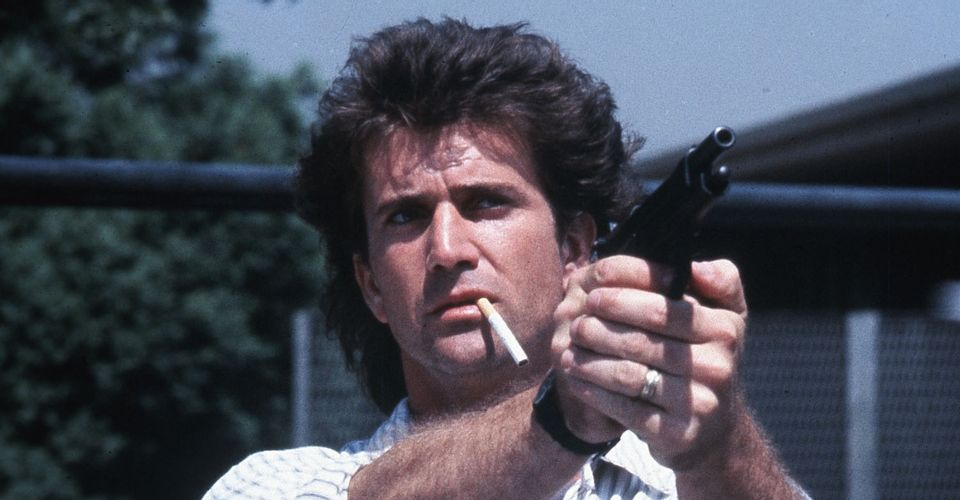
Riggs’s arc is about the restorative power of partnership and the importance of finding a family – even if it isn’t through intimacy or through blood. His relationship with Roger Murtaugh isn’t just about catching criminals; it is about Murtaugh pulling Riggs back from the ledge. Sometimes, our resilience is found in the people who refuse to let us give up. By the end of the film, when Riggs hands Murtaugh the bullet he intended to use on himself, the victory is emotional rather than tactical. It reinforces the idea that life is worth living as long as there is someone else to live it for.
These characters succeed not just because they are tough or resolute, but because they have the ability to think clearly under pressure (even if they have to talk themselves into it as McCane has to do – ‘Think, John. Think.’). Recently, I needed to use a spreadsheet formula I had never used before. I didn’t have to learn this formula – Co-Pilot created it for me. All I had to do was cut and paste. This is increasingly impactful on the upcoming generation of students and workers. But those of us who grew up in the ‘80s had to learn the hard way and these films celebrated this. They celebrated the person who knew how to fix a machine, lead a team, or outthink an opponent – even if the opponent was an unknowable Alien. This focus on agency was incredibly empowering. It suggested that the world was not a series of inevitable accidents, but a place where a single person’s skills and determination could alter the course of history. Whether it was the tactical ingenuity of a squad in a jungle (Predator) or a lone survivor in a ventilation shaft (Die Hard), the message was clear; your skills matter, your effort is visible, and your refusal to quit is your most potent weapon.
For every generation, movies have provided mythology. It is no coincidence that, as cinema attendance decreases, so do these mythologies. And like any mythology – be it John Matrix in Commando or Odysseus in Homer’s The Odyssey – they provide a mirror to our current times. The power of ‘80s action cinema is that it was personal. It showed us that while we might be battered by life, we are never truly broken as long as we have the courage to stand back up. By showing Rambo’s disorientation and Ripley’s cold sweats, the films acknowledged that high-stakes experiences leave a mark. The importance lay in the fact that these marks were not seen as disqualifying. A generation of viewers learned that you could be traumatised and still be the person who saves the day. It framed the struggle with one’s own mental health as a core component of the heroic journey, rather than a side-effect to be ignored. The finales of these films provided a communal catharsis, a point where the protagonist – and by extension, the audience – reclaimed their agency from a position of near-total defeat. These climactic beats functioned as a release valve for the accumulated tension of the narrative, transforming the hero’s personal struggle into a universal anthem of resilience. When a character finally delivers their definitive line that would be carried through subsequent films and repeated in school yards, office buildings, and streets throughout the world, it isn’t just a scripted piece of dialogue; it is the moment the character transcends their trauma and vulnerability to take a stand.
The brilliance of John McClane’s ‘Yippee-ki-yay, motherfucker’ lies in its utter defiance of the villain’s intellectual superiority. Throughout Die Hard, Hans Gruber mocks McClane as an unequal adversary (‘Do you really think you have a chance against us, Mr. Cowboy?’ ) ‘Yippee-ki-yay, motherfucker’ serves as a reclamation of his identity. He is essentially saying that his grounded, blue-collar competence is superior to Gruber’s sophisticated nihilism. For the audience, this moment is incredibly reinforcing because it tells us that the everyman is also the hero. It suggests that being the underdog – the person who is bleeding, exhausted, and underestimated – does not mean you are destined to lose. When McClane delivers that line, the audience experiences a surge of triumph over the bully in their own lives. We wish we could deliver that line so coolly under pressure. Whether we can or not in real life is not important because we believe we can deliver it whilst we are watching the film.
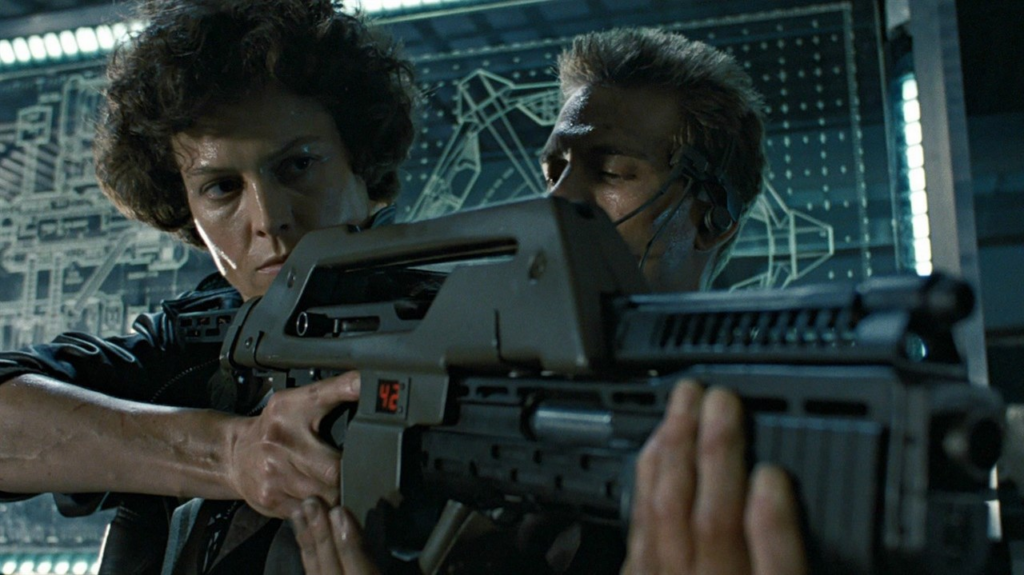
The same can be said of Ellen Ripley’s iconic line, ‘Get away from her, you bitch!’. It is the reaffirmation of motherhood, and a way to reclaim a role that she once held deeply. After an entire film spent navigating her feelings of inadequacy and failure of losing her daughter and her colleagues in the first film, as well as the clinical indifference of the Company, Ripley finds renewed purpose in the protection of Newt, and her womanhood in her subtle flirtation with Corporal Hicks. We share this triumph in the same way we share John McClane’s.
Both moments are about empowerment. Both McClane and Ripley are at their physical limits when these lines are delivered. McClane is at the receiving end of continuous Gruber insults (‘another American who saw too many movies as a child‘); Ripley is weary and bruised having thought she had failed in her protection of Newt. Yet, their triumphs are defined by their voice. By speaking back to the monster – be it a corporate terrorist or a xenomorph queen – they signal that they are no longer victims. Like McClane’s vest, this triumph is not clean, but it is all the sweeter for it.
While the ‘Yippee-ki-yay, Mother fucker’’ and ‘Get away from her, you bitch’ moments represent a loud, extroverted reclamation of power, the ending of First Blood offers a quieter, more somber form of triumph that is perhaps even more profound in its honesty. It serves as a necessary counterpoint to the traditional 1980s victory, suggesting that sometimes the greatest triumph is not the defeat of an enemy, but the simple, painful act of speaking one’s truth and being heard. There is triumph in the fact that we the audience are listening to his trauma, and there is tragedy in the fact that, in the film, the only man listening is the man who, it could be argued, made Rambo the man he is.
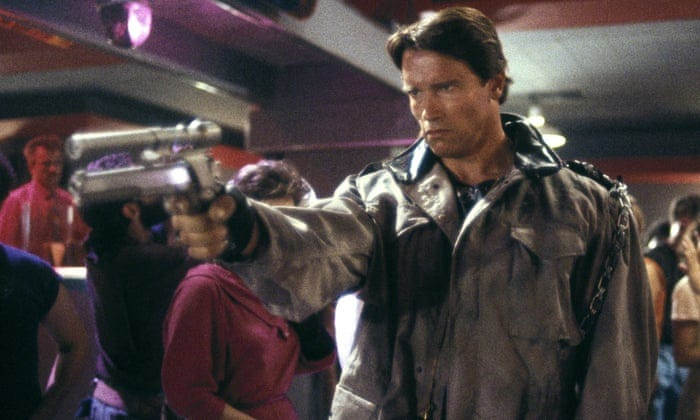
Similarly, the ending of The Terminator is tinged with sadness and regret. The battle is not over, in fact, it has hardly begun. Kyle Reese does not survive his ordeal; he dies in a cold, dirty factory, having given everything to protect Sarah Connor, the woman he loves. There is no snappy one-liner at the end of his life, only the clinical finality of sacrifice.
The evolution of Sarah Connor across the first two Terminator films offers perhaps the most sophisticated exploration of the hero’s journey, specifically because it highlights its staggering cost. Sarah begins her narrative as the ultimate proxy for the audience; she is the ordinary person defined by the mundane struggles of a terrible job and a messy flat. When she is pursued by an unstoppable machine, her terror is our terror. She represents us and we are entirely unequipped for the battles ahead.
Her transformation in the sequel into a sinewy, tactical warrior is the literalisation of the surface reviews that critics gave us of these films. She has built the body that many of us dream of possessing and was on show in the bodies of Schwarzenegger and Stallone. However, the brilliance of the character’s arc is a transformation that came at the price of her internal peace. While she has achieved the physical results through years of obsessive work that most of us would find unbearable, she has done so by sacrificing her emotional vulnerability. She has become as cold and driven as the machines she fears.

This provides a nuanced layer to the positive reinforcement of the genre. It suggests that while the muscle is an admirable achievement, it is not a cure for the trauma inside. Sarah Connor in Terminator 2 is a woman who has mastered her body but lost her connection to her own humanity. She is a protector who has forgotten how to be a mother. The audience looks at her and sees the peak of human discipline, yet we also see the tragedy of a person who has had to turn themselves into a weapon just to survive.
Her triumph, therefore, is not found in her ability to do pull-ups in a psychiatric cell or her proficiency with an assault rifle. Instead, her true moment of triumph arrives when she chooses to lower that weapon; when she decides not to become the monster she is fighting. It reminds us that while we might desire the strength to withstand the world, our greatest challenge is maintaining the warmth of our spirit while doing so.
In Sarah, we see the full spectrum of the ‘80s action experience: the vulnerability of the ordinary person, the gruelling work of self-improvement, and the final, difficult realisation that true resilience is about more than just a hardened exterior. It is about the courage to remain human in a world that demands we become machines.
For the audience, downbeat endings offered a more grounded form of positive reinforcement. They acknowledged that life does not always end with a perfect quip and a sunset. Sometimes, it ends with a scar, a memory, and a stormy road ahead. By showing heroes who were allowed to be tired, sad, and grieving, ‘80s cinema validated the complex reality of the human experience, proving that even in our darkest moments, there is a dignity in continuing to exist.
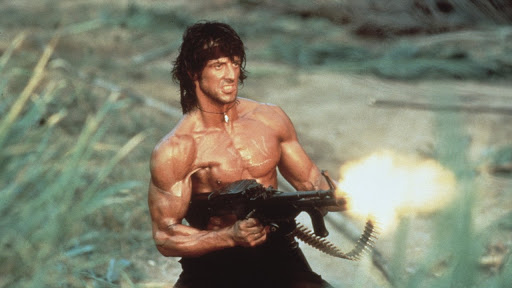
The discourse of the time frequently fixated on the body count, yet this focus entirely missed the point of why those stories resonated. The violence wasn’t always the goal; it was the cost. It served as a narrative device to illustrate that the world has consequences and that doing the right thing often demands a staggering price. For a generation of people facing personal trauma and everyday hardship, these films provided a framework for understanding that life is a series of hard-won victories. We weren’t a generation who were kept away from hardship – we climbed trees, built dams and fought with sticks in lieu of light sabres. We didn’t walk away from the cinema wanting to initiate conflict, despite what many of the most shrill critics thought; we walked away with a sense of renewed agency, feeling that if John McClane could survive a skyscraper under siege with nothing but his wits and a dirty vest, then perhaps we could navigate the complexities of our own lives.
The political interpretation of the era often stripped away the humanity of the characters to fit a broader academic narrative. Critics spoke of gory violence or the promotion of the military-industrial complex, but they didn’t always see the emotion in John Rambo’s face or the exhaustion in Ellen Ripley’s voice. To us, these characters did not exist on the political spectrum, they were real people overcoming hardship. They represented the everyman or everywoman who had been forgotten, underestimated, or betrayed by the very systems the critics claimed they were championing.
These films reinforced the idea that competence, loyalty, and sheer pig-headedness were the traits that truly defined a hero. While the politics of the 1980s have faded into the history books, the positivity provided by these stories – the belief that one person can overcome the most terrible of circumstances if they try – remains a foundational part of our enjoyment of these films. It was never about the ideology of bullets; it was about the heart of the person firing them. Despite the comedic tones of Arnold Schwarzenegger’s John Matrix, we know throughout the film that he is fighting for his daughter and we can’t wait for those who took her to get their comeuppance. General Arius (Dan Hedaya) may talk politics, but it is all a McGuffin. We know it’s personal.
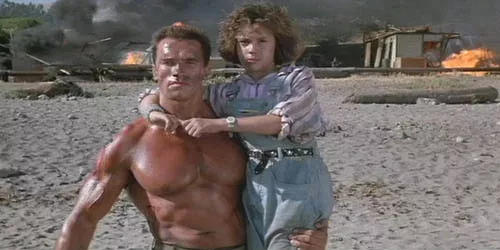
To truly appreciate the characters in these films, we must understand that they were never symbols of perfection, instead, they were studies of the complexity and brokenness of us, the viewing public. The genre illustrated through massive, high-stakes exploration how we can cope and succeed under pressure. By examining the specific vulnerabilities of these icons, we can see how their stories provided a blueprint for moving through stress and trauma with a sense of purpose. For many of us, these films were the closest we ever needed to get to self-help books.
Ultimately, these films suggest that muscle is merely a physical manifestation of internal strength. The aspiration isn’t necessarily to possess the physique of a bodybuilder (that is beyond most of us), but to possess the competence and character that the physique represents. We want to be the person who knows what to do when the world falls apart.
We see something of ourselves in the way these characters fail, which makes the way their triumph feels within reach. We will never fight an alien or rescue a loved one from terrorists, but we can face up to whatever challenges the world throws at us. Family or work stresses? We have that covered. Feelings of alienation or inadequacy? You can get through this. These films provide a blueprint for a certain kind of resilient dignity. They suggest that while we may be messy, flawed, and frequently outmatched, we have the capacity to be the hero of our own narrative. The cool one liners and resolute starters are not a starting point, but a reward for having survived the fire.
Is this simplistic? Possibly, but it is still undeniably powerful.
In this sense, the ‘80s action film is a celebration of the human spirit’s refusal to be defined by its trauma. They acknowledge that we are often broken, yet they insist that we are never defeated. That is the ultimate positive reinforcement; the belief that no matter how low the low, the high is always within our reach if we have the courage to keep moving forward.